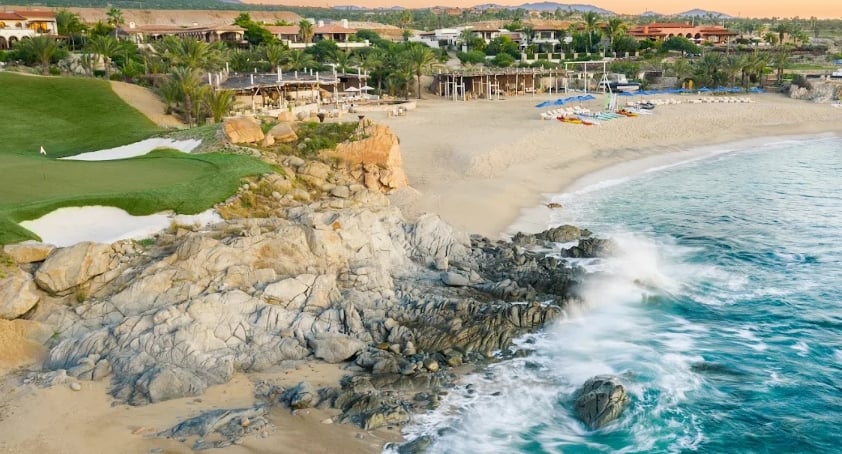
Buying property in Cabo San Lucas is one of the best decisions many North Americans make — for the lifestyle, the climate, and the long-term value. The process is different from the US or Canada, but it is well-established, safe, and straightforward when you have the right team in place. This guide walks you through every step, from your first property search to receiving your registered deed, so you know exactly what to expect at each stage. Most foreign-buyer transactions close in 45–90 days from accepted offer to keys in hand. Whether you are eyeing a beachfront condo in Médano, a villa in Pedregal, or a fairway home in Quivira, the roadmap below is the same.
• Most Cabo properties sit inside Mexico's restricted zone (within 50 km of any coast) — foreigners purchase through a fideicomiso (a Mexican bank trust that holds title on your behalf).
• Most purchases are cash transactions — mortgages for foreign buyers exist but are far less common in Cabo.
• A Notario Público (a government-appointed attorney) oversees every transaction. This is not the same as a US notary — the Notario has substantial legal authority and personal liability.
• Always use a third-party escrow company to hold funds. Never wire money directly to a seller or seller's agent.
• Due diligence is critical — title, liens, zoning, and HOA rules all need to be independently verified before closing.
• Plan a realistic timeline: 45–90 days from accepted offer to closing.
• What type of property are you looking for? (Condo, single-family home, beachfront estate, golf-community villa.)
• Intended use: personal vacation home, short-term rental income, long-term investment, or a mix.
• Budget: purchase price + roughly 8% for closing costs (transfer tax, notary fees, fideicomiso setup, escrow, registration).
• Pre-qualify for financing if you plan to borrow, or confirm cash availability and the timeline for moving funds across the border.
A local Cabo agent brings off-market access, neighborhood-level knowledge, and direct experience navigating the fideicomiso and notarial process. National search portals only show a fraction of what is actually available, especially in luxury inventory.
• Joe Taylor's role: curate the search, build offer strategy, negotiate on your behalf, and connect you with trusted attorneys, escrow, and the trustee bank.
• No cost to buyers — agent fees in Mexico are paid by the seller out of the sale proceeds.
• Tour properties in person or virtually — Joe regularly hosts video walk-throughs for out-of-state buyers.
• Review the HOA package up front: monthly dues, rental restrictions, special assessments, and house rules.
• Submit a written offer specifying price, deposit amount, due-diligence period, and closing timeline.
• Once accepted, both parties sign the Purchase Agreement (Contrato de Compraventa).
• Initial deposit: typically $5,000–$10,000 USD, held in escrow — never paid directly to the seller.
• A third-party escrow company is engaged. Joe typically recommends a US-based escrow firm for added security and familiar regulatory protection.
• Attorneys for both sides draft a formal Promissory Agreement (Contrato de Promesa) that locks in the deal terms.
• The earnest money deposit (typically 10% of the purchase price) is wired to escrow.
• The due-diligence period begins — usually 10–15 business days.
This is the most important phase of the transaction. Your attorney and agent verify every aspect of the property before any non-refundable money is at risk. The standard checklist:
• Clean title and full ownership history.
• No liens, debts, or legal encumbrances — confirmed by the Certificado de Libertad de Gravamen (certificate of no encumbrances).
• Property taxes (predial) paid current.
• Zoning and land classification — confirm the property is private titled land, not ejido (communal agrarian land that cannot legally be sold to foreigners).
• HOA documents, bylaws, financials, and any rental restrictions.
• Utility access, building permits, and condo-regime documents where applicable.
• Independent home inspection — optional but strongly recommended, especially for resales.
• Select a Mexican trustee bank — typically BBVA, Banorte, or Scotiabank.
• Submit the fideicomiso application with your passport, property details, and source-of-funds documentation.
• Apply for the SRE permit from Mexico's Ministry of Foreign Affairs (Secretaría de Relaciones Exteriores), authorizing the trust.
• Timeline: 2–6 weeks for permit approval.
• Cost: $2,000–$3,000 USD for setup, paid at closing as part of closing costs.
• All parties meet at the Notario's office (or grant power of attorney to a trusted representative if you cannot travel).
• The Notario reads the final deed (Escritura Pública) aloud — a legal requirement in Mexico.
• You (or your representative) sign the deed.
• The Notario instructs the escrow company to release funds to the seller.
• Keys are handed over — congratulations, you now own your Cabo property.
• The Notario then files the deed with the Public Registry, which takes 3–4 months to finalize.
• Transfer utility accounts — CFE (electricity) and water — into your name.
• Set up monthly HOA payments, ideally on auto-pay.
• Arrange property management if you plan to rent (Joe can refer trusted local managers).
• Receive your final registered deed package from the Notario in 3–4 months.
• Set a reminder for the annual fideicomiso renewal fee ($500–$800 per year, paid to your trustee bank).
The table below shows the typical duration of each phase. Most transactions fall within 45–90 days from accepted offer to closing — faster when the property is already vacant and clean of liens, slower when complex due-diligence issues surface.
|
Phase |
Typical Duration |
|
Property search |
Varies (days to months) |
|
Offer to signed agreement |
3–10 days |
|
Due diligence period |
10–15 business days |
|
Fideicomiso setup / SRE permit |
2–6 weeks |
|
Closing preparation |
1–3 weeks |
|
Closing day |
1 day |
|
Deed registration (post-closing) |
3–4 months |
|
Total (offer to closing) |
45–90 days |
Have these ready before you start the offer process — gathering them mid-transaction is the most common cause of avoidable delays.
• Valid passport (and clear color copies of the photo page).
• Proof of address in your home country (utility bill or bank statement, recent).
• Source-of-funds documentation — recent bank statements showing the purchase amount.
• RFC (Mexican tax ID) — your Notario or agent can help you obtain this.
• CURP — required if you will be opening Mexican financial accounts.
• KYC (Know Your Customer) forms for the escrow company and the trustee bank.
Your transaction team is small but specialized. Each person has a defined role — understanding who does what protects you and keeps the deal moving.
|
Role |
Who They Are |
What They Do |
|
Real Estate Agent |
Joe Taylor |
Property search, offer strategy, coordination |
|
Notario Público |
Government-appointed attorney |
Oversees the deed, verifies title, collects taxes |
|
Escrow Company |
Third-party (US or MX based) |
Holds and releases purchase funds |
|
Trustee Bank |
BBVA, Banorte, etc. |
Holds title in fideicomiso on your behalf |
|
Real Estate Attorney |
Optional but recommended |
Reviews contracts, protects your interests |
After dozens of transactions, these are the missteps that cost foreign buyers the most time, money, and stress. All of them are preventable.
1. Skipping or rushing due diligence. The 10–15 business-day window exists to protect you. Use every day of it.
2. Wiring funds outside of escrow. Never send money directly to a seller, listing agent, or unregulated third party.
3. Buying ejido land. Communal agrarian land cannot legally be sold to foreigners. Always confirm the property is private titled land.
4. Underestimating closing costs. Budget the full ~8% on top of the purchase price — not 2–3% as in many US states.
5. Relying solely on the seller's agent. Their fiduciary duty is to the seller. Always engage your own buyer's agent.
6. Not verifying HOA rental rules. Many Cabo communities cap nightly rentals or ban them entirely. Confirm in writing before you offer.
7. Skipping the home inspection. Saltwater, humidity, and seasonal heat are hard on Cabo properties. A few hundred dollars of inspection can prevent six-figure surprises.
8. Forgetting the annual fideicomiso fee. Missing payments can lead to administrative trouble with your trustee bank. Put it on auto-reminder the day you close.
No. Many foreign buyers complete their entire purchase remotely by granting limited power of attorney to a trusted local representative or attorney. Touring, document signing, and closing can all be handled without ever boarding a plane — though most clients do visit at least once during the search phase.
Yes, but options are limited compared to the US or Canada. A handful of Mexican banks and cross-border lenders offer mortgages to foreign nationals, typically requiring 30–50% down at rates higher than US conventional financing. Most foreign buyers in Cabo pay cash or use a HELOC against their primary residence at home.
Yes — when the transaction is structured correctly. The fideicomiso, the Notario Público, and third-party escrow are all legal mechanisms designed to protect foreign buyers. Thousands of Americans and Canadians own property in Los Cabos. The risks come from skipping due diligence or working with unqualified intermediaries, not from the system itself.
Ejido land is communal agrarian land granted to local farming collectives after the Mexican Revolution. It cannot legally be sold to foreigners, and even Mexican nationals can only acquire it through a complex regularization process. Properties marketed at well-below-market prices are sometimes ejido — always confirm the property is private titled land before making an offer.
Yes. Foreign LLCs, corporations, and family trusts can hold Mexican real estate, often through a Mexican corporation (which can own restricted-zone property directly without a fideicomiso, provided the property has commercial or rental use). Your Notario and a cross-border tax advisor should weigh in early — the right structure depends on your tax residency and estate-planning goals.
It depends on which party walks and at what stage. If you exit during the due-diligence window for a legitimate reason, your earnest money is fully refundable. After due diligence closes, the Promissory Agreement typically specifies penalties — often forfeiture of the deposit if the buyer walks, or double-deposit refund if the seller walks. This is exactly why escrow and a clear contract matter.

ADDRESS OFFICINE EN PEDREAL ONE D502, Camino Bonito Ote. SN, Pedregal, 23453 Cabo San Lucas, B.C.S., Mexico
ADDRESS OFFICINE EN PEDREAL ONE D502, Camino Bonito Ote. SN, Pedregal, 23453 Cabo San Lucas, B.C.S., Mexico