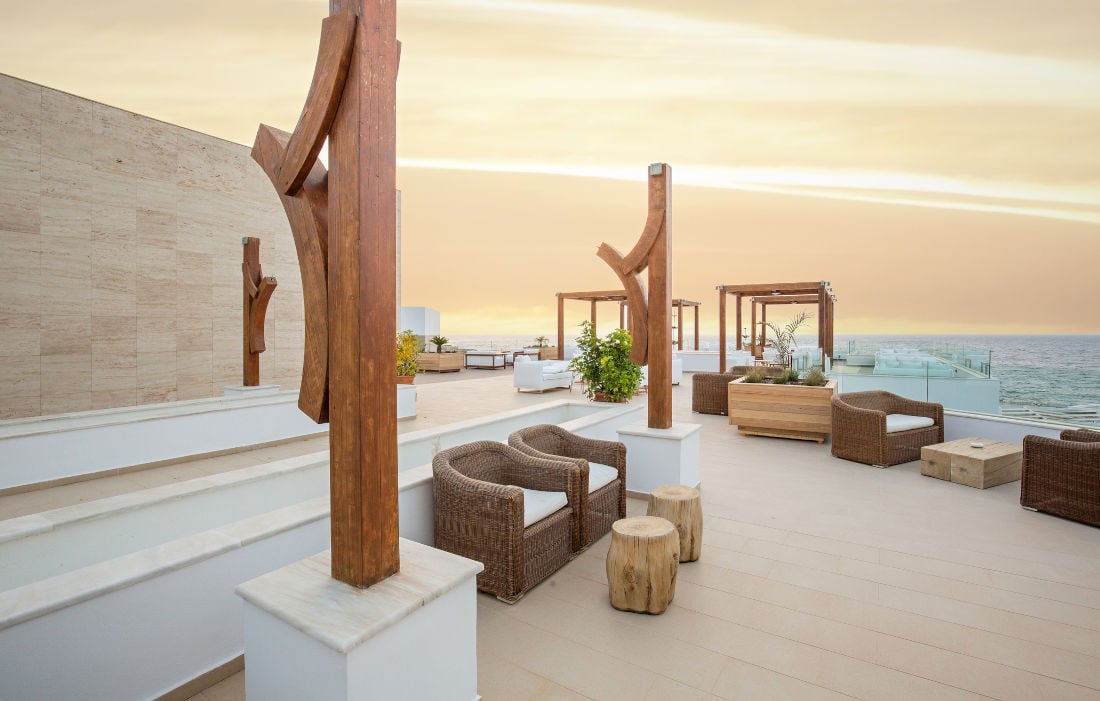
A garden terrace just outside the living room and a penthouse overlooking the coast offer two appealing versions of a Cabo second home. The difference becomes clearer when you picture an ordinary day: bringing in groceries, having coffee outside, welcoming guests and getting the home ready before you leave.
When comparing a ground-floor condo vs penthouse in Cabo, start with those routines. Then look at the access, outdoor layout, privacy and maintenance of each property. As you browse Cabo San Lucas condos for sale, use the floor designation as a starting point for questions. The floor plan and a walk through the building will tell you much more.
Key Takeaways
- Walk the entire route from parking to the condo. Ground-floor and garden-level labels do not guarantee access without steps.
- Check the actual view and outdoor layout. A lower-level residence can have an ocean view, and a penthouse label alone does not establish a private rooftop.
- Compare indoor space, terraces, gardens and garages separately before judging total square footage.
- Assess privacy, noise, sun and wind from the places where you will sit and spend time.
- Confirm the rights to outdoor areas and who maintains them before treating a garden or rooftop as part of your ownership plan.
Ground-Floor Condo vs Penthouse at a Glance
Neither floor type answers every buying question. Use this comparison to identify what needs a closer look at each property.
Priority | Ground-floor condo | Penthouse |
|---|---|---|
Everyday access | Check the parking route, slopes, entrance steps and thresholds | Check lift access, internal stairs and the route to any rooftop |
Outdoor living | Look at how the terrace or garden connects to the living space | Establish whether outdoor space is on the living level or upstairs |
Privacy | Check sightlines from paths, pools and neighbouring terraces | Check sightlines from nearby buildings, terraces and common areas |
Ocean views | Assess elevation and the outlook from inside | Assess the viewing angle, nearby buildings and future obstructions |
Upkeep | Ask about drainage, planting and any private pool equipment | Ask about terrace surfaces, drainage and roof waterproofing responsibilities |
Two condos in the same building can perform differently on these checks. Compare the actual units before deciding which floor to favour.
Follow the Route From Parking to Your Front Door
Begin the viewing where you would leave your car. Walk to the entrance carrying something, and notice the distance, slopes, steps and doors along the way.
A garden-level condo may connect directly to a terrace yet still require stairs from the parking area. For a penthouse, establish whether the lift serves the entrance level and whether you need another staircase to reach bedrooms or outdoor areas. Ask what access arrangements apply when the lift is being serviced.
Inside, check thresholds and changes in level between the living room, bedrooms and terrace. These details matter when you are moving luggage, carrying a tray outside or hosting someone who finds stairs difficult.
If you are viewing remotely, request a continuous video from the assigned parking space to the front door, then through to the terrace. A tour that begins inside the living room leaves the access question unanswered. Ask for measurements wherever clearance matters to you.
If reducing stairs is a priority, record the route for each property rather than relying on a floor label. A penthouse with suitable lift access and everything you need on one level could work well. A ground-floor home with a steep approach might require more effort than you expected. The useful comparison is the journey you and your guests would make every day.
Compare the Outdoor Space You Will Actually Use
Think about where you would have breakfast, read in the afternoon and serve dinner. A terrace beside the kitchen may suit frequent meals outside. A separate rooftop may appeal for evening gatherings, provided the route between levels works for you.
In Copala at Quivira, examine each unit’s outdoor arrangement. For example, the published listing for Penthouse 6603 expressly describes a furnished rooftop. That is a feature to evaluate for that unit; it should not be assumed from the word penthouse in another listing.
During the viewing, walk from the kitchen to the dining spot and look for somewhere to store cushions, cleaning supplies and outdoor furniture. On a garden terrace, check whether paths or shared facilities sit just beyond the boundary. On a rooftop, check how you would carry food upstairs and bring furniture under cover.
Return at the time you expect to use the space. Test the available shade and notice the wind at the seating area. A large terrace earns its place in your budget when its layout and conditions suit how you plan to live.
Check usable dimensions as well as area. Mark out space for a dining table and chairs with room to walk around them. A narrow strip around several rooms can function differently from one generous seating area.
Check Privacy, Noise and the View From Inside
Stand in the living room, then sit where the sofa and dining table would go. Repeat the exercise outside. You may discover that the ocean is visible from one corner of a terrace but less prominent from the rooms you would use most.
Lower-level residences can have sea views. Montage’s published description of garden-level Residence 7121, for example, identifies an outlook over Santa Maria Bay alongside a terrace, lawn and plunge pool. Building position and elevation deserve attention alongside floor number.
For privacy, look in both directions. Who can see your seating area from a pathway, pool deck or neighbouring terrace? From a penthouse, consider nearby buildings and shared upper-level spaces as well. Height alone does not settle the question.
Spend a few minutes listening with doors open and closed. Identify pool activity, delivery routes, lift equipment and other nearby sources of sound. Ask whether you can return when shared amenities are in use.
Finally, separate today’s outlook from its future surroundings. Review what could affect an ocean view, especially where undeveloped land or another construction phase lies ahead of the property.
Read the Area Figures Before Comparing Prices
Two listings with very different total areas may provide the same amount of indoor living space. Published Montage materials illustrate why the breakdown matters.
Published example | Indoor area | Outdoor area |
|---|---|---|
Two-bedroom garden-level floor plan | 2,783 sq. ft. | 3,940–3,941 sq. ft. |
Residence 5310 penthouse | 2,783 sq. ft. | 970 sq. ft. |
The first example is a published layout, and the second is a specific residence page. Both sources describe the figures as planned areas subject to change. They illustrate area categories rather than a comparison of current purchase opportunities.
Before comparing asking prices, separate the interior, terrace, garden, rooftop and garage figures. Check how those categories were measured and documented. Then compare bedroom count, condition, position, outdoor rights and included features, ideally using similar units within one community.
There is no sound basis for assigning every Cabo ground-floor condo a standard discount or every penthouse a fixed premium. The price comparison needs evidence from comparable properties.
Confirm Outdoor Rights and Maintenance Responsibilities
A space that you can walk onto still needs a clear explanation in the purchase documents. Ask your legal adviser to identify the status and boundaries of the garden, terrace or rooftop, including any exclusive-use rights and restrictions.
Review the condominium documents, current rules and maintenance arrangements. Establish who handles landscaping, irrigation, drains, terrace surfaces, waterproofing and any private pool equipment. Ask who pays when work involves both an outdoor area used by one owner and a shared building element. Do not infer the answer from the floor number.
Use a pre-purchase home inspection to investigate the condition of relevant surfaces and systems. Request available maintenance records, and ask about leaks, drainage work and completed repairs. Clarify any areas that require further specialist assessment.
Request the current fee schedule and information about approved work or assessments affecting the unit. Compare what the fees cover with the services you would arrange separately, such as garden care. A monthly amount without its scope tells you little about your workload.
If you intend to add shade, a pergola or other equipment, establish what approvals and technical checks would be needed before budgeting for the change. Understanding the roles of a notary and a buyer’s attorney can help you direct these document questions to the appropriate professional.
Choose for the Way You Will Use Your Cabo Home
For long winter stays, rehearse ordinary routines. If you expect to move between the kitchen, terrace and garden throughout the day, look closely at a layout that keeps those activities together.
If guests visit often, evaluate access using their needs too. Check whether someone can reach a bedroom, bathroom and outdoor seating area comfortably. Your own willingness to use a rooftop staircase may differ from a relative’s.
For shorter visits, think about arrival and departure. Who checks the drains, planting and outdoor equipment between stays? What needs moving or securing before you leave? Include these tasks in your plan for managing a Cabo property from abroad.
Before a second viewing, choose three priorities and give both properties the same checks. Keep specific notes such as “twelve steps from parking” or “dining terrace beside the kitchen.” Those observations are more useful than a general preference for a floor.
Frequently Asked Questions
Are ground-floor condos in Cabo always cheaper than penthouses?
No. Compare similar properties within the same community, taking account of indoor area, condition, outlook and outdoor features. A garden-level residence with substantial outdoor space may differ considerably from another lower-floor unit. The floor designation alone does not support a reliable price comparison.
Does every Cabo penthouse come with a private rooftop?
Do not assume it does. Ask for the floor plan and a clear description of the outdoor areas included with the unit. If a rooftop is offered, confirm how it is accessed, the documented rights to use it, applicable restrictions and maintenance responsibilities.
Can a ground-floor condo in Cabo have an ocean view?
Yes. The garden-level Montage example discussed above shows why lower-floor properties should be assessed individually. Check the actual outlook from inside and from the terrace, along with neighbouring buildings and land that could affect the view in future.
Is a ground-floor condo better if you want fewer stairs?
It may be, but walk the full route first. Parking access, slopes, entrance steps and internal level changes all matter. Compare that route with the lift access and layout of the penthouse. If step-free access is essential, verify it for every area you need to use.
Compare Your Shortlist With Joe
Send Joe Taylor two listings or floor plans and your three main priorities. As you plan your Cabo buying trip, use that shortlist to arrange viewings that let you compare access, outdoor living and the questions each property raises.
