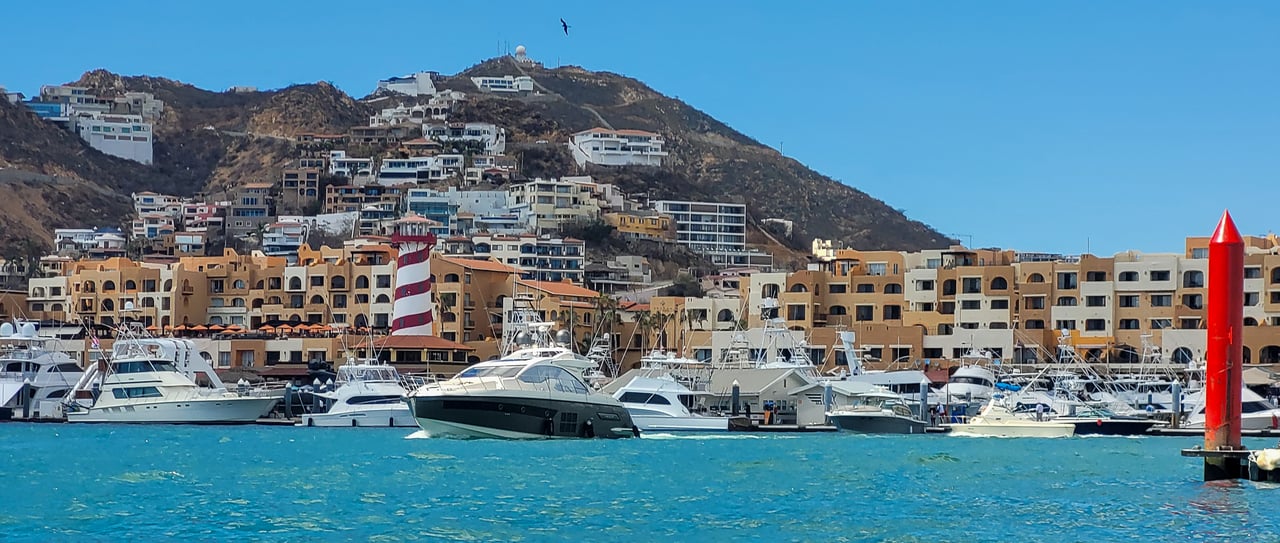
Yes, an ocean view in Cabo can change as neighboring land is developed or existing buildings are altered. Before buying property in Los Cabos, check what sits between the property and the ocean, what can be built there, and whether a documented restriction protects the view from your specific home or condo.
The view that sells you on a property might be the horizon from the living room, the Arch from the balcony, or the sunset from the pool. Each deserves a closer look than a listing photo provides.
Start with three questions: What can you see today? What could appear in front of it? What protection, if any, applies?
Key Takeaways
- An ocean-view listing describes the property's current outlook; ask separately about future construction and any claimed protection.
- Identify the neighboring parcels that could affect your view, including land outside the community.
- Review applicable building limits, available approved plans, and current HOA or condominium documents.
- Check the exact home or condo at normal eye level. Drone footage and model-unit views are supplementary.
- Have a qualified local attorney review any claimed legal protection, and use an architect or survey professional when elevations need assessment.
An Ocean-View Listing Describes What You Can See Today
“Ocean view” can mean a broad panorama from the main living area or a narrow strip of water visible from one end of a balcony. Before discussing whether it will last, establish what the listing actually offers.
During a showing, look from the places where you would spend time: the sofa, dining table, primary bedroom, and outdoor seating. A view available only when you stand beside the railing may feel different once you settle into the home.
Be specific about what matters. If the Arch is the reason you love a condo, retaining water views elsewhere might not satisfy you. If your priority is an open horizon from the terrace, a neighboring roof could change the experience without removing every glimpse of the ocean.
When a listing uses words such as “permanent” or “protected,” ask what supports that statement. It should lead to documents and a property-specific explanation.
Map the Land Between the Property and the Ocean
Stand at your preferred viewpoint and trace the line toward the water. Which parcels lie along it? Which sit to either side? Could a more distant building affect the horizon even if the nearest lots remain unchanged?
Aerial imagery can help you orient yourself. Parcel mapping and, where needed, a survey help establish which land you are looking at. Do not assume a fence, road, landscaped strip, or apparent community boundary marks the legal limits of a property.
Pay attention to vacant lots, low buildings, and large undeveloped areas. For an existing building, ask whether relevant additions or redevelopment plans are known. For vacant land, investigate what could be built even if no project has been announced.
Consider a hypothetical hillside villa overlooking an empty downslope lot. The terrace has an open view today. The useful next step is to identify that lot and examine its applicable construction limits, then assess how a building within those limits could sit relative to the terrace.
An empty lot is a question to investigate. The absence of construction today does not establish that the land must stay open.
The same applies to a golf fairway or landscaped area. Ask about ownership, boundaries, applicable restrictions, and potential changes before treating the current layout as permanent protection.
Check Land Use, Building Limits, and Approved Plans
Three types of information help answer different questions.
Land use concerns how a parcel may be used. Los Cabos describes its Constancia de Uso de Suelo as identifying permitted uses under the applicable urban development plan. That is a starting point for investigating neighboring land.
Building limits concern the permitted dimensions and placement of construction. Ask your local team to confirm the rules that apply to the parcel, including relevant height limits and setbacks. The resulting “building envelope” is the space within which a building may be allowed.
Approved plans concern a particular project. Where available, request the construction license and corresponding drawings, and confirm whether they are current. A proposed design, an approved project, and a completed building are different stages.
The municipality's construction-license requirements call for plans, sections, and elevations. Those drawings can help an architect assess the building's position and dimensions relative to your viewpoint.
Evidence | What it helps establish | What it does not establish by itself |
|---|---|---|
Parcel map and topographic survey | Relevant boundaries and elevations | A legal right to retain the view |
Land-use information and applicable rules | Permitted use and construction limits | The exact design of a future building |
Construction license and approved drawings | The authorized project and its dimensions | A permanent prohibition on later changes |
HOA or condominium documents | Community controls and approval procedures | Protection from land outside their scope |
A specific legal restriction, if one exists | Its stated scope, subject to legal review | Protection for every direction or viewpoint |
Ask who can supply the documents and how access can be arranged. The published land-use procedure requires an application from the owner or an authorized representative; buyers should not assume they can obtain every neighboring property's records directly.
If no approved project is found, the next question remains: what does the applicable framework allow? Record any gaps in the information rather than treating them as reassurance.
Read the HOA Rules Behind Any Claim of a Protected View
A gated entrance or a well-maintained community does not tell you which restrictions apply to neighboring construction. Request the current architectural guidelines and relevant HOA or condominium documents.
Look for the actual provisions governing height, building placement, roof structures, and any defined view corridors. Ask which parcels are subject to those provisions and who administers them.
The municipal construction requirements also call for architectural approval from the development or condominium association in the circumstances identified in the form. Community approval is a separate item to investigate alongside municipal permissions.
If you are told that the community protects views, follow up with a few precise questions:
- Which clause applies to this property and the land in front of it?
- What viewpoint or area does a stated view corridor protect?
- Are exceptions possible, and how are changes to the rules approved?
- Who handles a complaint if a project appears inconsistent with the rules?
Land beyond the community boundary deserves particular attention. Your HOA's restrictions may not cover it; have the relevant documents checked.
When comparing Cabo's major communities, use setting and amenities to narrow your search. Assess view protection at the property level once you have a shortlist.

Check the View from the Exact Home or Condo
For a condo, verify the unit number, floor, orientation, and balcony position. A corner unit, an interior unit, and the floor above can offer different sightlines within the same building.
Request photos or video from the actual unit, taken at normal eye level. For a remote viewing, ask for a continuous walkthrough from the main living area onto the terrace, with the camera showing neighboring land as well as the ocean. Include the view from a seated position.
A rooftop panorama or drone flight can help explain the surroundings. It does not establish what you will see over breakfast.
Imagine two hypothetical condos facing the same neighboring parcel. An architect's assessment might show that an identified construction scenario leaves the higher unit's horizon visible while affecting the lower unit's seated terrace view. That is a reason to assess each unit individually, even when both listings say “ocean view.”
For a hillside home, consider the elevation of the neighboring site, the building's proposed or permissible position, and your own viewing height. Ask how the applicable rules measure height and account for grade changes or roof elements. A floor count alone cannot show those relationships.
If you are considering living in Pedregal or another hillside setting, a local architect or survey professional can help assess the relevant elevations. Ask them to distinguish an approved design from a scenario illustrating possible construction.
For Preconstruction, Review the Full Build-Out
With preconstruction, the view assessment needs to include what the development could look like after its later phases are built.
Request a plan identifying your selected unit, surrounding buildings, known future phases, and the heights or elevations needed to understand their relationship. Ask which documents are approved and which remain proposals.
A hypothetical rendering might show open ground beyond a balcony, while the overall plan places another building there in a later phase. Viewing both together helps you ask about the completed setting rather than relying on an attractive sales image.
Have your attorney review what the purchase contract says about the unit, representations about its view, and possible project changes. If the building does not yet exist, ask whether any simulated viewpoint corresponds to your unit's planned location and elevation.
The same questions apply when considering branded residences in Los Cabos. A familiar name can be part of the property's appeal, while the view still requires review of the specific plans and contract.
Ask What Legally Protects the View
If a seller says your view is protected, ask for the document establishing that protection. It might involve community restrictions or a separate legal instrument that requires closer review.
A qualified Baja California Sur real estate attorney should explain what the document covers, which parcels it affects, and whether it benefits the property you are buying. Ask about registration where relevant, its effect on future owners, possible changes, and how the restriction could be enforced.
Scope matters. An identified height restriction or corridor may address a particular part of the outlook. Have the attorney explain how it relates to the view you want to preserve. A casual written assurance needs review before you rely on it as a binding restriction on neighboring land.
Our guide to an attorney versus a notary when buying in Cabo explains their roles in the purchase. For this question, ask for a clear explanation of the claimed protection and anything it leaves unresolved.
A View Checklist Before You Commit
Bring the findings together while you still have time to discuss them with your buying team.
- Define the view you want. Photograph it from the exact rooms and outdoor seating areas that matter.
- Identify the relevant parcels. Include nearby land outside the community and any more distant site that could affect the outlook.
- Confirm applicable rules. Establish the land use and building limits for those parcels with the local team.
- Request available project documents. Review relevant licenses, approved drawings, and plans for later development phases.
- Check claimed protection. Read community documents and have any separate legal restriction assessed.
- Evaluate the geometry. Use professional help where terrain, building dimensions, or unit elevations make the impact unclear.
- Address unresolved questions. Discuss missing evidence, review time, and any appropriate contract terms with your team before taking on obligations.
Then ask yourself: would you still want this home if the view changed in the scenario you reviewed?
You may decide that the setting, layout, and current outlook justify proceeding. You may prefer a different unit or property. The assessment gives you a clearer basis for that choice.
Frequently Asked Questions
Can a neighbor block my ocean view in Cabo?
Neighboring construction or alterations could affect it. Whether a particular project is permitted, or conflicts with an applicable restriction, requires review of the parcel's rules, approvals, and relevant legal documents. Start by identifying the land along your view.
Does an ocean-view listing guarantee a permanent view?
Do not assume it does. Establish what is visible from the exact property today, then ask what supports any claim about the future. Photographs and listing descriptions alone do not establish a legal restriction on neighboring construction.
Do HOA height restrictions protect every owner's view?
The impact depends on the wording, covered parcels, terrain, and the owner's viewpoint. A building within a stated height limit could still affect a particular sightline. Review the rule and assess how it applies to the home or condo.
Is an empty lot in front of a property a warning sign?
It is a reason to investigate. Identify the parcel, check applicable land use and building limits, and request available project information. An empty lot does not automatically make a purchase unsuitable, but its present condition does not establish future protection.
How can I check a preconstruction condo's future ocean view?
Request unit-specific location and elevation information, plans for surrounding buildings and later phases, and confirmation of each document's status. Have the relevant contract provisions reviewed. A model unit or rendering may depict a different viewpoint from the condo you are buying.
Is a higher-floor condo or hillside home automatically safer?
Elevation can help a sightline clear surrounding land or buildings, but the relative heights and positions still need assessment. Check the exact property against relevant construction scenarios. A high floor or hillside address alone does not establish permanent protection.
Does beachfront ownership guarantee the entire view?
Do not assume beachfront status protects every part of a panorama. Identify the property's boundaries, the outlook that matters, and nearby land or structures that could affect it. Any claim of permanent protection should be supported by a property-specific assessment and document review.
What documents should I request before buying an ocean-view property?
Start with relevant parcel mapping, land-use information, construction limits, available licenses and approved drawings, and current community documents. For preconstruction, include the full development plan. Request any document cited as protecting the view and arrange professional review where needed.
Talk Through Your Shortlist with Joe Taylor
Send Joe the Los Cabos homes for sale, along with the view that matters most to you. That gives you a starting point for identifying neighboring parcels, available documents, and professional checks to arrange before a visit or purchase decision.
