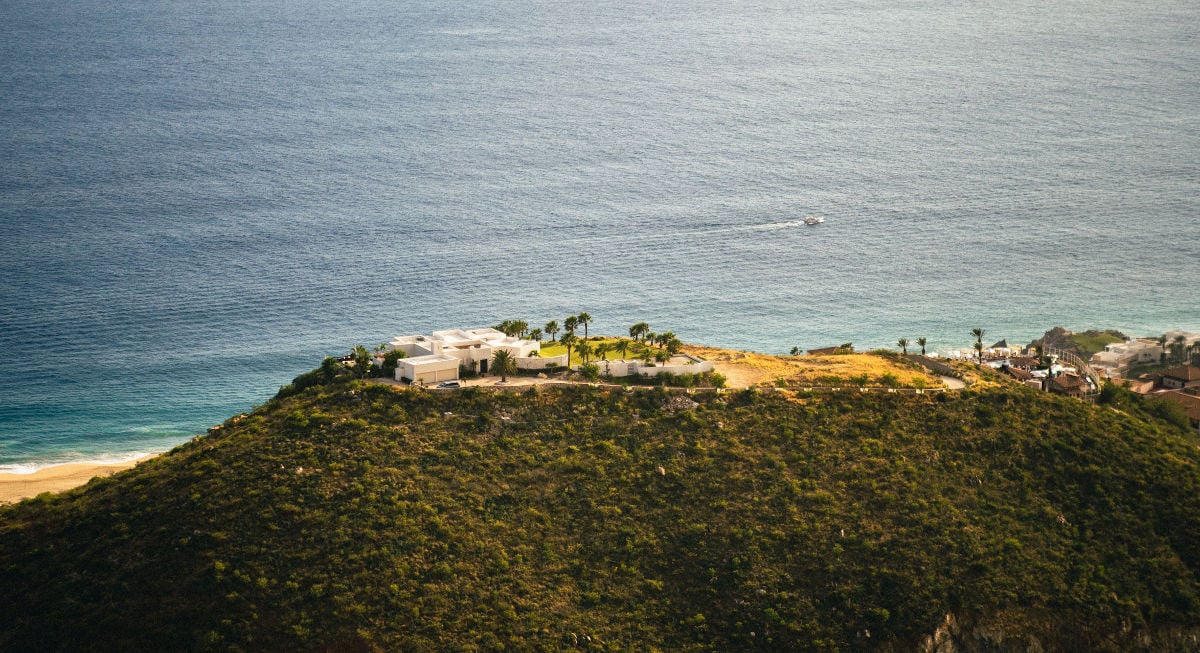
California dreaming costs more than ever. Here's what your money actually buys you in Los Cabos instead — and why the comparison is shifting faster than most people realize.
If you're from California and you've been watching the real estate market, you already know the feeling. The median home price in the state crossed $854,700 in early 2026. In San Diego — just two hours from the border — the average rent hit $3,100 a month. In Los Angeles, overall cost of living runs more than 100% higher than in Cabo San Lucas.
And yet, a lot of Californians looking at Los Cabos still ask: Is it actually affordable? Or has Cabo turned into another overpriced coastal market dressed up in sunshine?
The honest answer is: it depends on what you're comparing. Los Cabos is not mainland Mexico — it's a luxury resort destination with price tags to match in some segments. But when you stack it against California dollar for dollar across housing, daily life, and investment potential, the value gap is still striking — and in some categories, it's actually widening.
Key Takeaways
- California's median home price is now $854,700 — nearly double what a quality condo in Los Cabos costs.
- Overall cost of living in Cabo is roughly 50% lower than in Los Angeles, with groceries running 42% cheaper, according to Numbeo data.
- A comfortable expat lifestyle in Cabo runs $2,000–$3,500/month — all-in, with housing included.
- Entry-level condos in Los Cabos start around $250,000–$400,000, with Corridor properties averaging $592,000 — still well below comparable California coastal properties.
- Cabo is not "cheap" Mexico — it's a premium destination with premium pricing in some areas, but it offers a lifestyle California can rarely match at any price.
- The value equation goes beyond price per square foot — climate, beaches, golf, and a 3-hour flight from LAX are part of the math.
- Property appreciation in Los Cabos has been strong: average house sale prices rose 13% in 2024, and the luxury segment continues to outperform.
The California Reality Check
Let's start with where California actually is right now, because the numbers are genuinely extraordinary.
In March 2026, the median home price in California reached $854,700 — and that's the median, not the luxury end. California home values sit roughly 2.5 times the U.S. national median, and the state's median ranged from around $480,000 in the Central Valley to $1.06 million on the Central Coast in early 2025.
Only about 23% of California households would likely qualify for a mid-tier home mortgage based on their income in 2026, down from 31% in 2019. The state where millions went to build a better life has become, for most of its residents, a place where homeownership is mathematically out of reach.
In San Diego specifically — the closest major California city to Los Cabos by flight — overall cost of living is around 45% above the U.S. national average, with average rent running approximately $3,100 per month and utility costs about 39% above average.
That is the baseline against which Cabo should be measured. Not Des Moines. Not Phoenix. California.
What the Same Money Buys in Los Cabos
Real Estate: Price Per Square Foot Tells the Story
The average price per square meter to buy an apartment in downtown Cabo is $1,631 USD, while in Toronto it's $12,877 USD. The comparison with California coastal cities is similarly dramatic.
In Los Cabos, here's what the market looks like across segments:
Entry-level condos — well-located, 1–2 bedrooms in established developments — typically start in the $250,000–$400,000 range. For that price in Los Angeles or San Diego, you're looking at a studio in a mediocre neighborhood.
The Cabo Corridor — the premium stretch between Cabo San Lucas and San José del Cabo — has an average sales price of $592,268 with a list-to-sale ratio of 99%, highlighting strong demand in the luxury segment.
Cabo San Lucas proper shows an average sales price of $430,057 with a 98% list-to-sale ratio, appealing to a wide range of buyers from mid-range residential to commercial investors.
The full Los Cabos market saw average sale prices increase 13% in 2024 to $768,554, with single-family homes averaging $1.32 million — a 26% jump — driven by strong luxury demand.
That last number might give pause. But context matters: a $1.32 million average for single-family homes in a world-class beachfront resort destination, still significantly below what comparable properties cost in Malibu, La Jolla, or even parts of the East Bay, represents remarkable value for what you're getting — Pacific Ocean frontage, year-round sunshine, and a resort lifestyle that California simply cannot replicate at those prices.
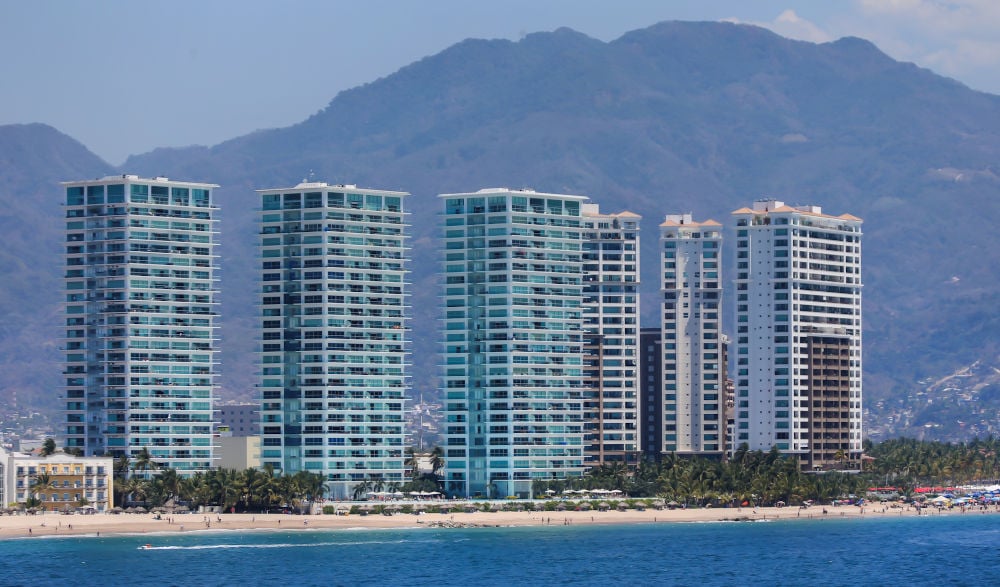
Daily Life: Where the Savings Are Real
This is where the comparison becomes most compelling for anyone considering a move or long-term stay.
According to Expatistan data updated October 2025, the cost of living in Los Angeles is 106% more expensive than in Cabo San Lucas — meaning you'd need more than double the budget in LA to maintain an equivalent lifestyle.
Consumer prices in Cabo San Lucas are 50.6% lower than in Los Angeles, and groceries run 42.7% cheaper.
On the ground, that plays out like this:
Housing: Renting a one-bedroom in Cabo runs $500–$1,000 a month, versus $2,500–$3,500 for comparable space in San Diego or Los Angeles. Even a mid-range furnished rental in a good Cabo neighborhood stays well below $2,000 for most of the market.
Groceries: Groceries for one person hover around $360 a month — roughly half what most Californians spend. Local markets, Walmart, Chedraui, and Costco (yes, there's a Costco in Cabo) give residents genuine choice across price points.
Dining: Dinner out ranges from $10 to $20 per person at a solid local restaurant. The taquería scene is exceptional and absurdly affordable. At the high end, Cabo has Michelin-worthy restaurants — but even those cost less than comparable dining in San Francisco or Santa Monica.
Utilities: This is a nuanced category. Electricity is Baja California Sur's wildcard — the state is an energy island, disconnected from the national grid, which makes power both fragile and expensive. Summer bills can climb to $300–$500 a month when air conditioning runs full-time; in winter, usage drops sharply with some residents paying as little as $50 for a two-month period. Internet, by contrast, is cheap and reliable — around $30/month. Across electricity, water, gas, and internet, the survey average was $343 monthly, with significant variation by season and lifestyle.
Healthcare: Private clinics and English-speaking physicians are available throughout Los Cabos. Out-of-pocket costs run dramatically below U.S. rates — a doctor's visit that costs $300 in California might run $40–$80 in Cabo. Private health insurance for expats is available for $100–$300/month depending on age and coverage.
The All-In Monthly Number
What does a comfortable, full expat lifestyle actually cost in Los Cabos? Many expats report living well for less than $2,000 a month. More realistically, a comfortable lifestyle with housing in a quality development, regular dining out, a car, and occasional travel runs $2,500–$3,500/month for a couple — a figure that in California would barely cover rent in many coastal markets, with nothing left over.
Where Cabo Is Not Cheap: Honesty Matters
Anyone telling you Los Cabos is "cheap" is selling you something. It is not cheap. It is, however, dramatically more affordable than California on nearly every meaningful metric — while delivering a lifestyle that California's coastal cities can no longer match at any reasonable price.
Here's where Cabo's costs surprise people:
Electricity in summer. As noted, AC-heavy months can produce bills of $300–$500. Budget for it and design or choose your property accordingly — good insulation, ceiling fans, and smart layouts matter more in Baja than they do in San Diego.
Imported goods. If your lifestyle depends on specific US brands, expect to pay more — import duties and logistics add real cost. Shopping at local markets and embracing the local food supply cuts this sharply.
Property management fees. Owning a vacation property you don't live in full-time requires management. Budget 15–25% of rental revenue for professional property management.
Water reliability. Municipal water supply is inconsistent in parts of Los Cabos — some neighborhoods go weeks without service, forcing residents to pay for delivery trucks at around $70 per load. This is a quality-of-life issue more than a financial one, and it varies dramatically by neighborhood and development. Resort-quality developments typically have their own water infrastructure.
Luxury neighborhoods. In premium areas like Palmilla or Querencia, expect prices to rival luxury properties anywhere in North America — but in a location with year-round sunshine and some of the best beaches in the world. The value is real even at those prices; it's just a different kind of value.
The Investment Angle: Where California Loses Completely
Here's where the California-versus-Cabo comparison tilts most dramatically in Cabo's favor: rental income potential and overall return on investment.
A $850,000 California median home generates no rental income if you live in it, costs $7,000+ per month in mortgage payments at current rates, and faces property taxes that average 1–1.2% annually. After property taxes, insurance, and maintenance, the carrying cost of an average California home is staggering — and appreciation has slowed to low single digits.
A $450,000 Los Cabos condo, purchased cash (as most foreign buyers do), can generate $30,000–$50,000+ per year in gross Airbnb revenue. Los Cabos ranks in the top 1% of all Mexican markets for Airbnb revenue, with average annual earnings of approximately $33,000 USD at a 57% occupancy rate and $176 average daily rate. Top-performing properties in prime locations significantly exceed those figures.
You are also exempt from California state income tax on your Cabo rental income — though you remain subject to federal U.S. taxes and Mexican taxes, with credits available to prevent double taxation. The effective tax burden on rental income in Los Cabos is dramatically lower than on California rental income once state taxes, California's strict rental regulations, and carrying costs are factored in.
And unlike California — where tenant protections, rent control expansion, and short-term rental bans are spreading to more cities every year — Los Cabos currently operates in a low-regulation short-term rental environment, offering hosts more operational flexibility.
What $500,000 Buys: A Side-by-Side
To make this concrete, here's what $500,000 gets you in each market as of mid-2026:
In California (San Diego):
- A 1-bedroom, 700 sq ft condo in a non-coastal neighborhood
- HOA fees: $400–$700/month
- Property tax: ~$5,500/year
- No beach access, no pool (typically)
- Short-term rentals restricted or banned in most San Diego zones
In Los Cabos (Cabo Corridor):
- A 2-bedroom, 1,400–1,800 sq ft condo in a resort development
- Resort amenities: pool, beach club, fitness center, concierge
- HOA fees: $300–$600/month
- Annual property tax (predial): under $1,000
- Ocean views available in this price range
- Short-term rentals permitted; Airbnb income of $30,000–$50,000+/year realistic
The lifestyle difference is not subtle. It is the difference between a base-level asset in a market where you'll always be fighting for value, and a genuine resort property in one of the world's most desirable destinations — for the same investment.
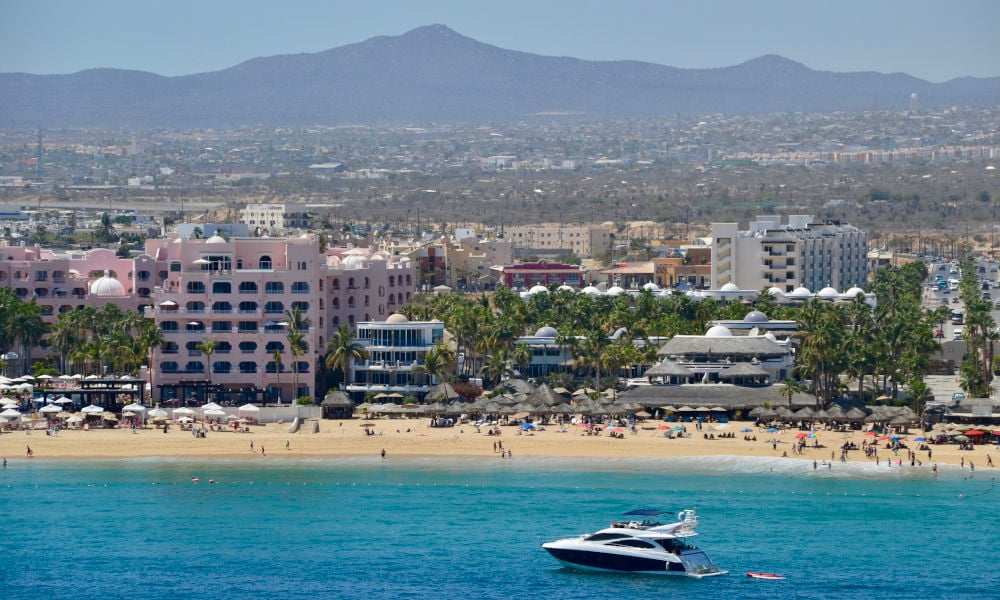
Is Cabo Getting More Expensive?
Yes — and that's actually part of the argument for buying now.
In the first half of 2025, 1,038 properties sold in Los Cabos, totaling $878 million in closed volume — a 24% increase over the same period in 2024. Prices in luxury Corridor communities have held firm or risen throughout a period when other markets have softened.
Home sales grew by over 70% in volume in Q1 2025, with average sale prices rising 56% — underscoring strong demand for high-end residences. The buyers driving this market are largely cash buyers from the US and Canada, insulated from the mortgage rate environment that has paralyzed California's domestic market.
Is there risk of overbuilding? The two-bedroom condo segment in particular is facing pressure, with 1,395 total condos on the market and median prices dipping 8.6% in Q1 2026 — creating a genuine opportunity for buyers who do their homework and avoid undifferentiated inventory.
The conclusion is not that Cabo is still cheap. It is that Cabo continues to offer dramatically better value than California at every price point where the comparison is meaningful — and that the value gap, while narrowing in some luxury segments, remains enormous in the entry-to-mid market where most buyers actually operate.
Check condos for sale in Cabo San Lucas.
The Bottom Line
Is Cabo affordable compared to California? By any honest measurement: yes, significantly — and in ways that matter.
Your dollar buys more real estate. Your lifestyle costs less to maintain. Your investment generates income that California properties cannot match under California's regulatory environment. And you get something no California dollar can purchase at any price: a world-class beachfront resort destination, 300+ days of sunshine, and the ability to walk off a direct flight from LA in under three hours.
The Californians who moved to Los Cabos five years ago are not complaining about affordability. They are complaining that they didn't move sooner.
Frequently Asked Questions
Is Los Cabos actually cheaper than California, or is that a myth?
It's not a myth — it's supported by hard data. Overall cost of living in Cabo San Lucas runs approximately 50% lower than in Los Angeles, with consumer prices 50.6% cheaper and groceries 42.7% less expensive (Numbeo, 2025). That said, Cabo is not "cheap" by the standards of mainland Mexico. It's a premium resort destination — it simply offers far better value than California's coastal cities on nearly every metric that matters.
What does a comfortable lifestyle cost per month in Los Cabos?
A single person living comfortably — with housing, groceries, dining out, utilities, and a car — typically spends $1,500–$2,500/month. A couple with a similar lifestyle runs $2,500–$3,500/month. Either figure includes housing, which is where California's costs are most catastrophically unaffordable by comparison.
How do property prices in Cabo compare to San Diego or Los Angeles?
California's median home price reached $854,700 in early 2026. In Cabo San Lucas, average sales prices run approximately $430,000; in the premium Corridor area, around $592,000. For the price of a modest San Diego condo, you can own a 2-bedroom resort property with ocean views, pool access, and Airbnb income potential in Los Cabos.
Is Los Cabos real estate appreciating?
Yes — strongly in recent years. Average sale prices across Los Cabos increased 13% in 2024. The luxury house segment saw a 26% price increase. The Corridor and Palmilla/San José del Cabo areas have outperformed. Some condo segments are experiencing inventory pressure and slight price softening in 2025–2026, creating selective buying opportunities.
Can I generate rental income to offset the cost of owning in Cabo?
Yes, and this is one of the most compelling parts of the comparison. Los Cabos ranks in the top 1% of all Mexican markets for Airbnb revenue, with average listings earning approximately $33,000 USD/year at a 57% occupancy rate. Top properties in premium locations can earn significantly more. California's equivalent properties face strict short-term rental regulations that limit or eliminate this income stream.
What are the hidden costs of owning in Los Cabos that Californians underestimate?
The main surprises are summer electricity bills (AC in Baja's heat can cost $300–$500/month in peak summer), water supply inconsistency in some neighborhoods (requiring delivery trucks at ~$70 per load), import tariffs on US-branded goods, and property management fees if you're renting the property (15–25% of revenue). These are real costs, but they are manageable and still leave the overall ownership expense well below California equivalents.
Is now a good time to buy in Los Cabos, or has the window closed?
The window for "Cabo before anyone knew about it" closed years ago — that ship has sailed. But the window for buying quality property at valuations that still significantly undercut comparable California assets remains open. The luxury Corridor market is competitive and holding price. The condo segment has more inventory and more negotiating room in 2025–2026. Buyers who are selective — focused on location, development quality, and rental program viability — continue to find strong value.
